How Much Is My Coin Worth

March 7, 2010 by admin  
Filed under Hobbies

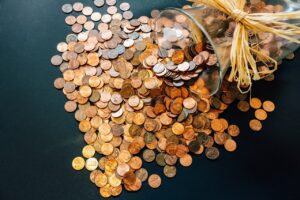
Determining the worth of coins isn’t as easy as you may think. In order to sell them at their right value, several things have to be considered.

Collectors vs. Dealers

Whenever possible, sell to a collector than a dealer. Almost always the true collector will pay more than the dealer. The drawback is that finding them can be quite difficult. Even when you do, you must sell them something of real value. A dealer on the other hand, is more likely to buy even if your coins are not that rare. They are also widely available. But as stated, they’ll buy it for less money.

Simply put: if you want to get the most value, go for a collector. If you can settle for an average price, go for a dealer.

Factors that Affect the Worth of Coins

The most critical factor is rarity. An Indian head cent (1877) will be worth $300 or more. An 1865 variant will sell for $10. The 1903 type retails for a $1.50 or thereabouts. When judging value, scarcity is the most influential factor. The mint mark or lack thereof can also affect the price. Also consider that certain sets or variants are more valued than others.

Of course, the condition is important too. If it’s in good shape, it will be worth more. However it also boils down to the dealer or collector. If the coin is rare enough, it will still fetch a good price even if its condition is less than ideal.

Circulation is also a factor. The S Quarter (1926) sells for about three dollars. But the uncirculated can fetch $600.

The worth of coins is heavily influenced by circulation. An S-VDB cent (1909) goes for $300 even worn out. For non circulated types, the value doubles. Demand will also determine its value. For example, the D dimes (1916) sell for $1,600, while the 1798 variants sell for $1,000. The reason is mercury dimes are more valued from 1798 coins.

How to Check Its Value

The easiest way is to take the coin to a dealer. Don’t tell them that you’re selling. Just have it appraised. Go to different dealers to get the average value. You can also go to the Web. There are several sites that can identify the worth of coins. The next step is to grade it. Also check for mint marks.

Average Prices

These are just average value. The factors mentioned above can drastically alter its price.

Cents

1 cent Wheat 1909-1958: 2 cents
5 cent Liberty Nickels 1883-1912: $1
10 cent Barber dimes 1892-1916: $1.25

The 25 cent Barber and Standing Liberty Quarters are worth $3. Silver Washington go for about $1.15. The 50 cent Walking Liberty is worth $3.

Dollars

The 1878-1921 Morgan Dollars are worth $7, as are Peace Dollars (1921-35). The Eisenhower dollars from 1971-78 are worth about a dollar and a half.

On the surface, the worth of coins may not seem much unless you’ve got the rare ones. But taken together and with the right buyer, you can get quite a profit.

How Much Are Stamps

February 2, 2010 by admin  
Filed under Hobbies

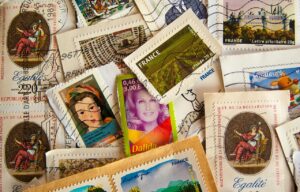
Those who are interested in starting a stamp collection would have wondered just how much are stamps and which stamps should they collect. You might have guessed correctly that the type of stamps you collect has a direct effect on how much you’ll be spending on your collection. This is also a way to classify what type of collection you will be making.

Type of Stamps

To help you figure out how much are stamps worth, you should consider what type of collection you’ll be making. If you’re the traditional type then you’ll collect various stamps according to their country of origin. Yet, there are those who have collections based on the design, otherwise known as a topical collector.

However, there are those collect copies of stamps according to type, also known as a specialist. And there are those who collect whatever stamps they can get hold of, which is what we call a worldwide collector. Of course, you can tell that a collector that specializes on certain types of stamps will have to spend a little bit more than a worldwide collector. This roughly gives you an idea just how much are stamps worth.

Factors that Affect How Much are Stamps Worth

Take note that many of the stamps you’ll find will either be less than or equal to its original face value. However, you will eventually encounter stamps that are really worth a lot more. Take note of the different factors that affect how much are stamps worth.

A stamp’s age: Stamps are generally like antique collections that capture the grace and aesthetic qualities of the time they were made. Thus, stamps that are much older will definitely go over their original face value. In fact, stamps that are generally more than 40 years old are indeed more valuable.

Rare or Common: The number of stamps that are in circulation also has a direct effect on its price. Limited edition stamps are generally more expensive than the regular ones you can find. A combination of qualities like that of an old and rare stamp will definitely fetch a larger price.

Used/New:
As a rule, if a stamp you’re collecting has been used for postage then its value has decreased. New stamps that haven’t been placed on mail will be of greater value.

Condition: Yet another factor that will affect how much are stamps worth would be its condition. A well cared for stamp that remains in its excellent condition will be worth more than a similar one that has a relatively poor condition. Stains, smudges, color, brightness, and other signs of damage lowers the value of your collection.

How Much Is A Postage Stamp

January 23, 2010 by admin  
Filed under Hobbies

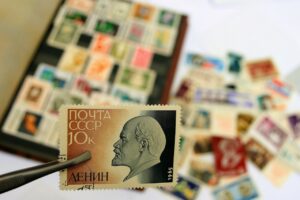
Throughout history, stamps have been serving a very important role in postal services. These small adhesive papers act as evidence that the services have already been paid for by the customers. After purchase, they must be attached to envelopes to signify that the deliveries are paid. For some individuals, collecting stamps can be a very good hobby. Let’s find out other interesting details about them including the prices for postage stamps.

The Prices for Postage Stamps

How much is a postage stamp? As of May 11, 2009, the price for a stamp is set at 44 cents, with each extra ounce to be charged an additional 17 cents. Time after time, it seems that stamp prices continuously move in an upward trend. For instance, the price for a single stamp was only 10 cents some time in September 1975. However, rates went up to 25 cents by the year 1988. By the time 2008 arrive, the price was already somewhere around 42 cents before its current price today at 44 cents.

Additional Information and Other Interesting Details

The first use of stamps was recorded at the United Kingdom of Great Britain and Ireland in May 1840. The very first stamp was called Penny Black, which was soon followed by the Two Penny Blue. Both of them featured an image of Queen Victoria in her youth. In March 1843, Switzerland followed and issued its very own set of stamps. In August of that same year, Brazil started its own set of stamps. In the U.S., the first stamps were released only in 1847. During that time, the 5-cent stamp featured Benjamin Franklin, while the 10-cent stamp showed George Washington.

Stamps are available in various shapes and sizes. These include pentagonal, triangular and circular shapes, in addition to the usual rectangular figures. In places like Tonga and Sierra Leone, they use stamps resembling the shapes of fruits. Other interesting materials used in these items include plastic, wood and foil. Aside from the different materials, various printing methods are also used to design them such as web offset printing, photogravure and line engraving. In some places, they prefer to use intaglio as well as lithography.

Today there are many types of stamps available including express mail, definitive and commemorative versions. Likewise, there are also self-adhesive, personalized and non-denominated postage versions. In recent times, some of them have become more popular than other versions. These include the so-called Uganda Cowries from Uganda, the Treskilling Yellow from Sweden and the Scinde Dawk from Pakistan. At the same time, collectors highly value stamps like the Hawaiian Missionaries from Hawaii, Gronchi Rosa from Italy and the Basel Dove from Switzerland.

How Much Are My Baseball Cards Worth

November 28, 2009 by admin  
Filed under Hobbies

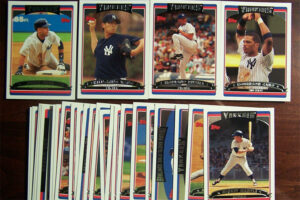
There are a lot of elements that affect the value of baseball cards. Before you buy or sell, you need to take these factors into account.

Grading

Don’t buy or sell a card that hasn’t been graded. A graded card means its physical appearance has been assessed. There are several companies perform this service. They check the card’s corner sharpness, clarity, centering etc. Using sophisticated equipment, the smallest stains on the surface can be detected.

A flawless card is called a gem mint. Other rankings are mint, near mint, excellent, very good all the way to poor. These companies do charge a fee for their services. However, you can’t expect a serious collector to buy your card if it’s not been graded. Assessing the value of baseball cards is best done through grading, and every serious seller / buyer subject their cards to it.

Few cards actually get the gem mint rating. However, those in excellent condition will fetch a good price. If the card pack is in demand, you can sell for more than twice the current market price.

Rarity

The rarer the card, the more it is worth. On the average those from the 1970s and below are more valued. A big reason is that those cards weren’t mass produced. Starting in the 1980s, cards were produced in vast numbers, lowering their worth.

Player Popularity

Of course the player’s popularity will have a great effect. A lesser known player won’t be worth much, even if the card is rare. A player with enduring popularity can be sold for much more.

Timing

This is also a critical element in evaluating the value of baseball cards. A player who breaks the home run record will see a marked increase in their card’s worth. But once that record is broken, the card value drops too. Some of the most valuable are rookie cards, and those of players who have passed away.

Tips on Selling

Here are a few more things to keep in mind when selling these cards. Go to dealers, online or in real life. This will allow you to keep an eye on the value of the cards. Online auction sites are a good place to assess the worth of your set.

The value of baseball cards change with time. That rookie card you’re holding may not be worth much now. But if he turns into a major star in the next few years, it will become a collector’s item. When it comes to rookie cards the key is to be patient.

Keep in mind that classic cards will almost always outsell new ones. The reason is that most cards today can be made from the finest materials, not possible during the early years of the game. Also they can be purchased easily, so they’re not worth as much. Extra features have greater value. An autographed card will be in greater demand.

Knowing the value of baseball cards isn’t that hard to figure out. After you have them graded, it’s only a matter of finding a buyer. With aficionados all around, it shouldn’t be that difficult.